Artus Quellinus
(Antwerp 1609 - Antwerp 1668 )
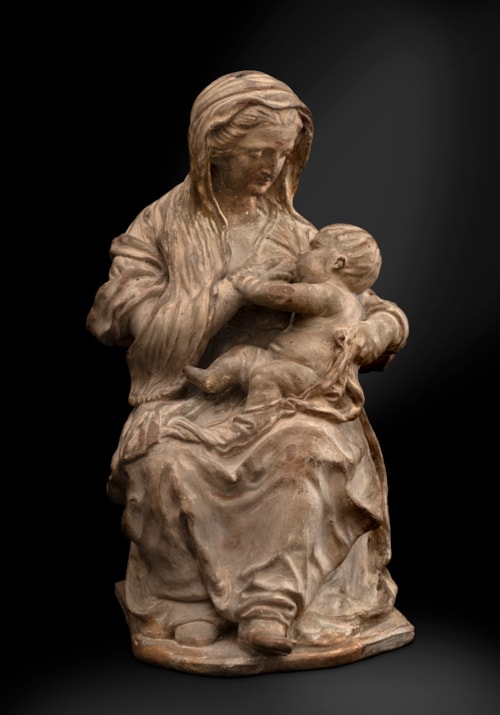
Virgin and Child
Artus Quellinus the Elder (1609–1668) was one of the most influential sculptors of the seventeenth century in the Southern Netherlands. Born in Antwerp into a family of artists, he was trained at a young age and soon showed exceptional talent. Like many ambitious artists of his generation, Quellinus travelled to Italy, where he spent several years in Rome. There he studied ancient sculpture and absorbed the classical ideals promoted by artists such as François Duquesnoy.
This Italian experience proved decisive. Upon his return to the Low Countries, Quellinus became a key figure in introducing a classicising form of Baroque sculpture, characterised by balanced proportions, calm dignity, and controlled emotion. His reputation reached its peak with the monumental sculptural programme for Amsterdam’s new city hall (today the Royal Palace on Dam Square), a project that established him as an international master.
Alongside these grand public commissions, Quellinus also produced smaller works, often in terracotta. In the seventeenth century, terracotta was not merely a preparatory material but a respected medium in its own right. Its softness allowed artists to model figures quickly and directly, capturing subtle movements and expressions.
For Quellinus, terracotta offered a way to explore intimacy and emotional nuance. The surface of the material preserves the traces of the sculptor’s hands, creating a sense of immediacy that is often less pronounced in marble or bronze. This quality is particularly important in his religious works intended for private devotion.
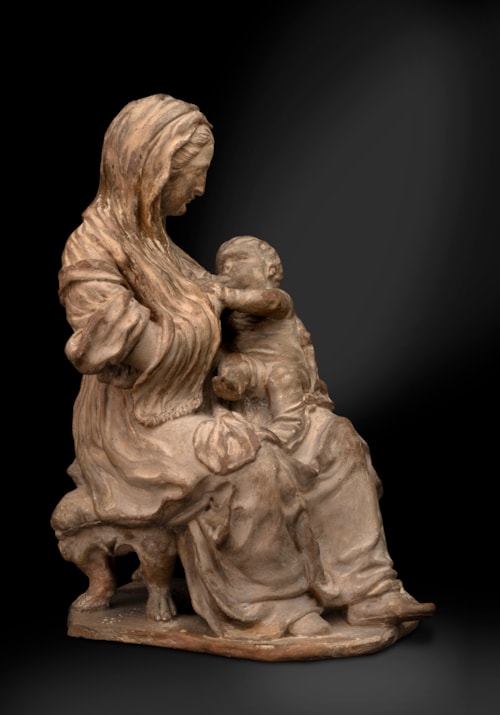
One of the most striking examples of this intimate approach is Quellinus’ terracotta Maria Lactans. The subject—Mary breastfeeding the Christ Child—was widely known in Christian art as a powerful symbol of both Christ’s humanity and Mary’s nurturing role. By the seventeenth century, such images were especially valued for their emotional accessibility and their ability to support personal meditation. Quellinus presents Mary not as a distant queen of heaven, but as a young, attentive mother. Her pose is calm and natural, and her expression conveys quiet concentration and care. The Christ Child nestles against her body in a gesture of trust and dependence. The sculptor’s sensitive handling of anatomy, drapery, and facial features reinforces the scene’s gentle realism.
Stylistically, Maria Lactans reflects Quellinus’ ability to blend classical restraint with Baroque warmth. The composition is stable and harmonious, echoing antique models, yet the emotional tone is soft and deeply human. The use of terracotta enhances this effect: the warm colour and textured surface contribute to the sense of closeness between viewer and image.
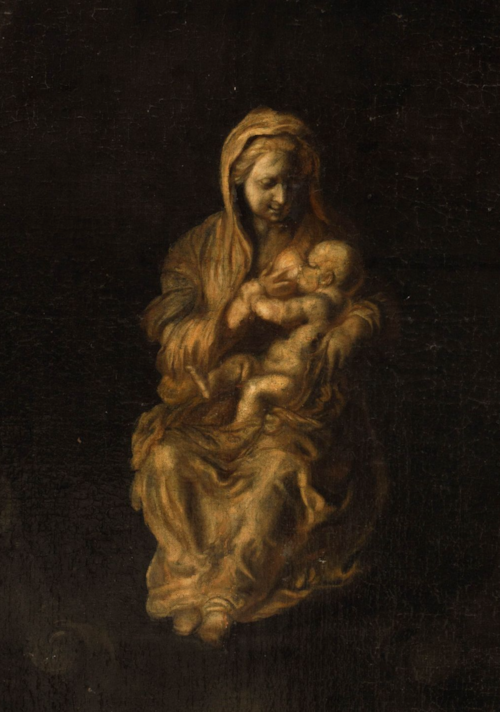
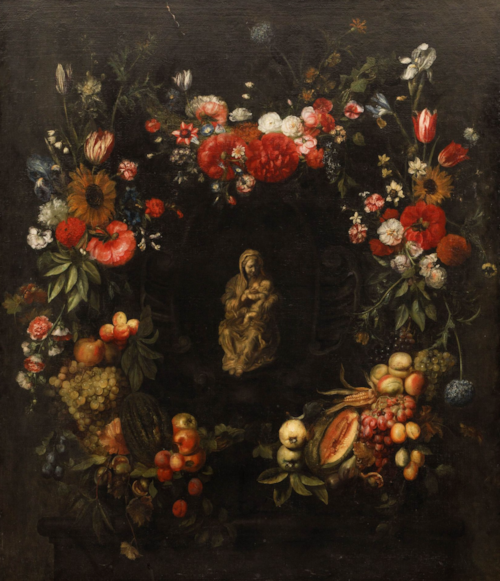
The sculptural model of Maria Lactans also survives in a painted version, generally attributed to the workshop of Erasmus Quellinus II. The painting closely follows the pose and intimate interaction of the terracotta sculpture, suggesting that the three-dimensional model served as a direct source. This reuse across media reflects common workshop practice in seventeenth-century Antwerp and highlights the close artistic connections within the Quellinus family.
Terracotta, 27.5 x 16 x 20 cm
+32 (0)478 38 18 29


RELATED WORKS
YOU MAY ALSO LIKE